Alex O'Brien, MSW, LISW
I know what it feels like to carry the weight of trauma, anxiety, and depression, and to have your body feel like it’s working against you. For years, I struggled not only with emotional and mental health challenges, but also with physical health imbalances that created a domino effect of symptoms. When I was exposed to toxic mold, my condition worsened, and I realized just how interconnected our mental and physical health truly are.
My own healing journey taught me so much about how trauma and physical health intersect, from hormones and gut health to nervous system regulation and emotional resilience. These experiences inspired me to change careers and dedicate my life to helping others find relief and empowerment. I went from working as a Food Scientist to earning my Master’s Degree in Social Work from Case Western Reserve University, becoming a therapist so I could guide others through their own journeys of healing.
Today, I bring both lived experience and professional training to my practice. I specialize in helping women trauma survivors uncover the root causes of their distress, whether emotional, physical, or a combination of both. I use an integrative approach that combines Acceptance and Commitment Therapy, somatic experiencing, and polyvagal-informed techniques. I often collaborate with functional medicine providers to address the underlying health factors contributing to symptoms. My goal is to help you move through life with more ease, presence, and freedom, so you can experience your emotions fully and engage in the life you want to live.
Want To Verify My Social Work License?
You can do so here:
Alex is a Certified Integrative Mental Health Professional (CIMHP). What does that mean?
A Certified Integrative Mental Health Professional (CIMHP) is trained to understand mental health through a whole-person lens, recognizing that emotional well-being is deeply connected to the body, nervous system, lifestyle, and underlying physical health.
As a CIMHP, I look beyond symptoms alone and consider factors such as stress physiology, nutrition, sleep, inflammation, hormone balance, and nervous system regulation, alongside emotional and psychological experiences. This integrative perspective allows therapy to address not just what you’re feeling, but why it may be showing up the way it is.
My role is not to diagnose or treat medical conditions, but to thoughtfully integrate mind-body awareness into therapy. This helps clients make sense of their experiences and collaborate more effectively with their broader healthcare team.
Things fully accepted in a therapy space with me:
- Long-winded answers to my questions – because we need to talk through our problems out loud!
- Dark humor – because it truly has a place in coping with our life experiences.
- Physical comfort as a top priority – In PJs or sweatpants? Definitely! Cup of hot tea or a snack? Totally! Sitting in bed? Absolutely! I encourage you to set yourself up for max physical comfort during our sessions. It’s calming for the nervous system, after all.
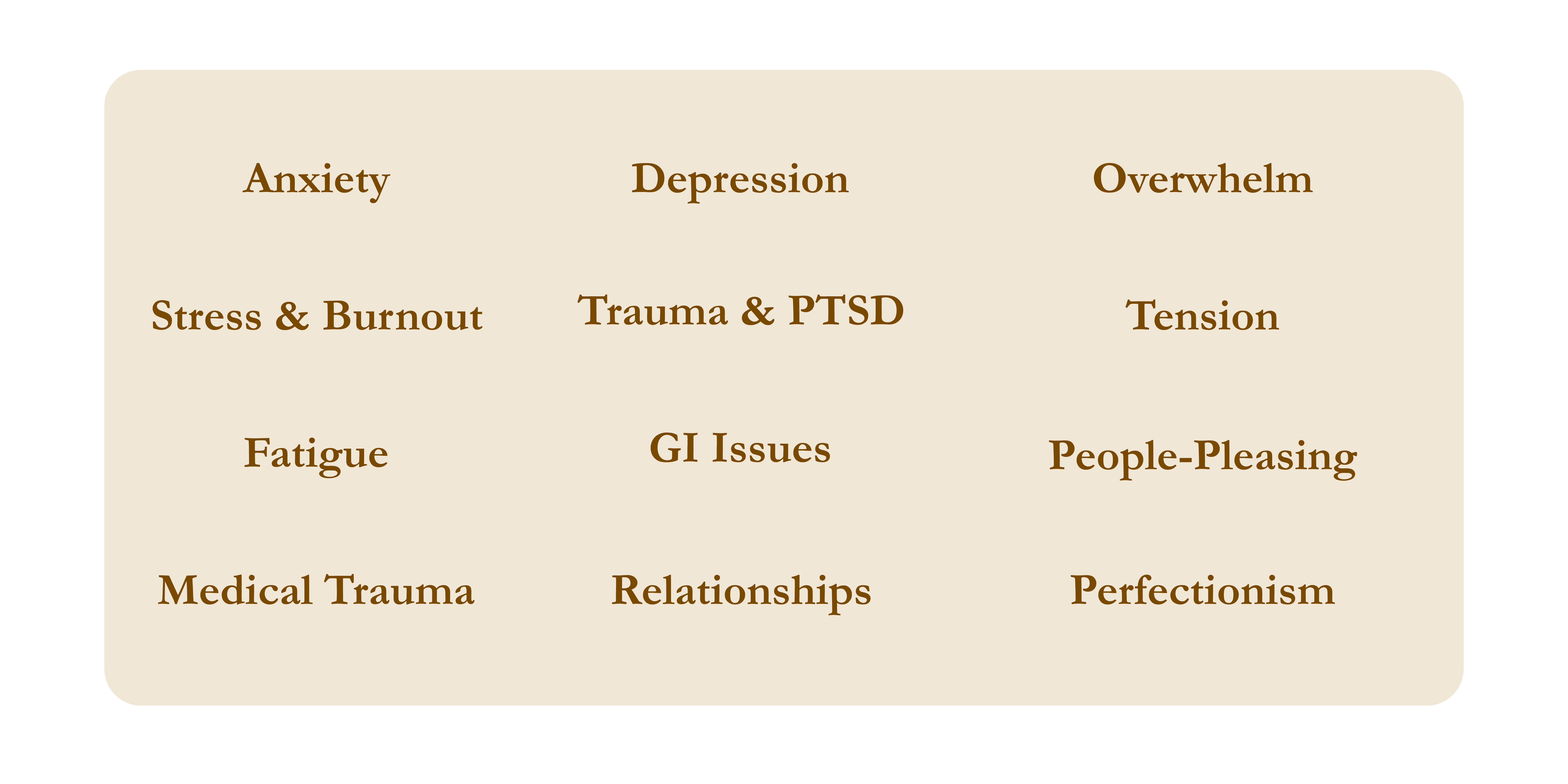
Areas I Support:
My Built-In Nervous System Regulators
Meet the two dachshunds you may occasionally see wandering the background of your appointments - Calvin & Winston